We Buy Everything Precious.
Gold · Silver · Platinum · Diamonds · Watches · Coins · More
Walk into our San Jose showroom for a free XRF-verified assessment — or submit online. We show you exactly how we calculate every offer. No pressure, no guesswork, no waiting.
What We Buy
Click any category to see the full list of items we accept. We buy more than most — if it has precious metal content, we want to see it.
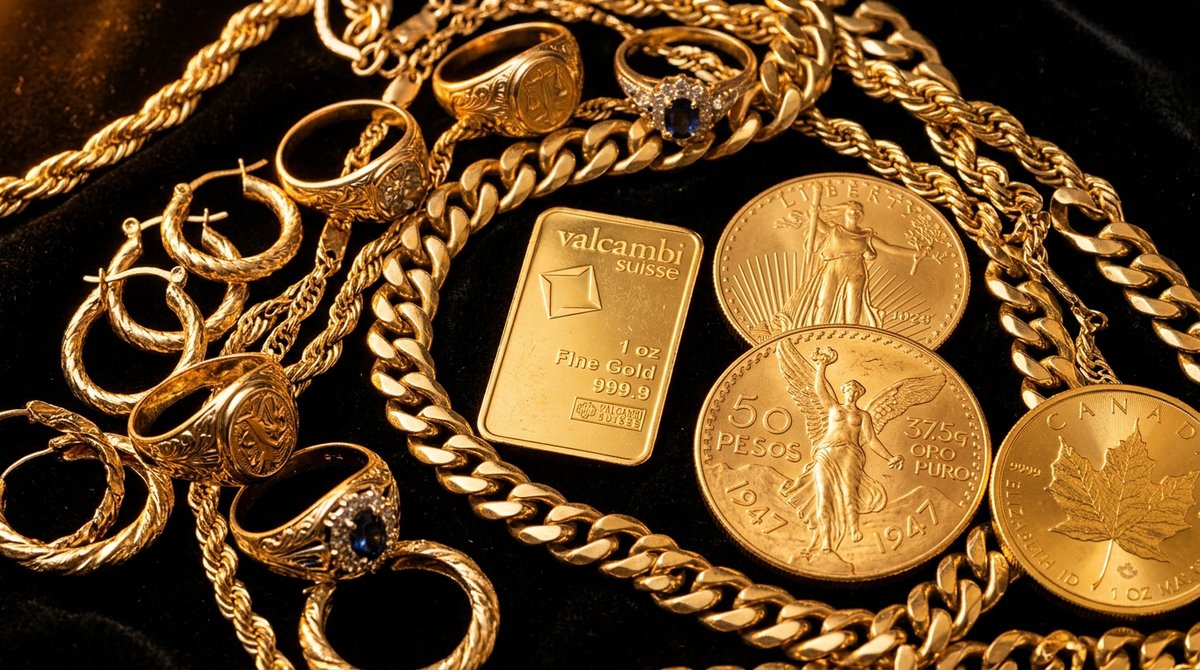
10K–24K jewelry, coins, bars, dental gold, and industrial. Best payouts in the Bay Area.
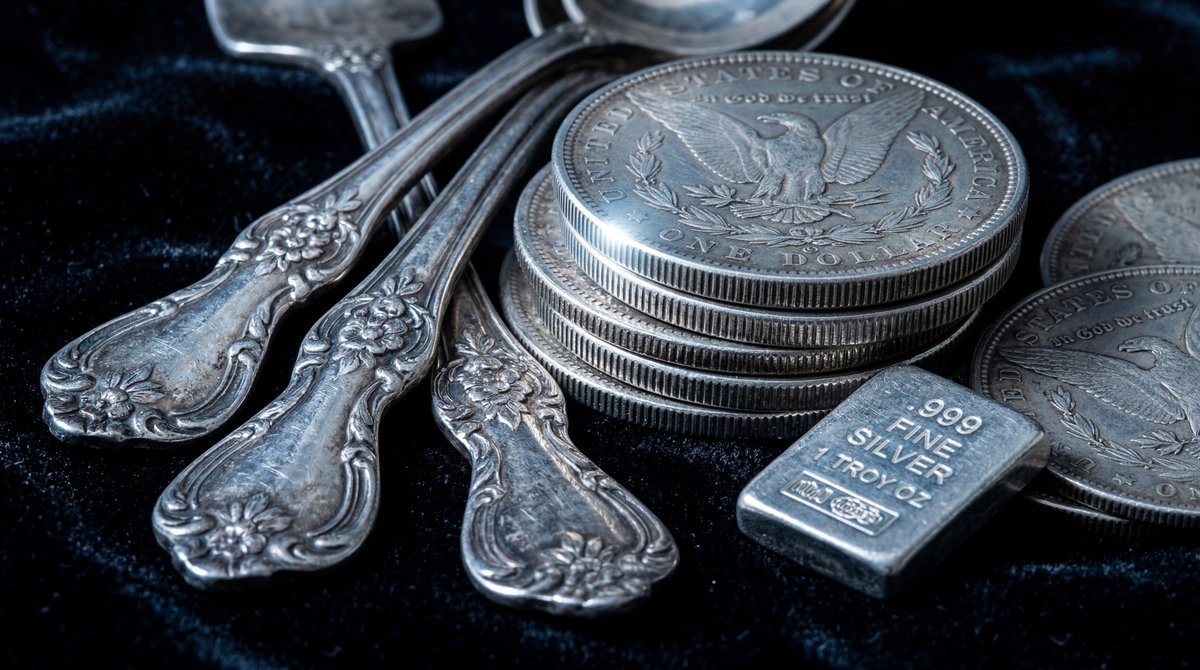
Sterling flatware, jewelry, bullion coins and bars, 90% junk silver, industrial silver.
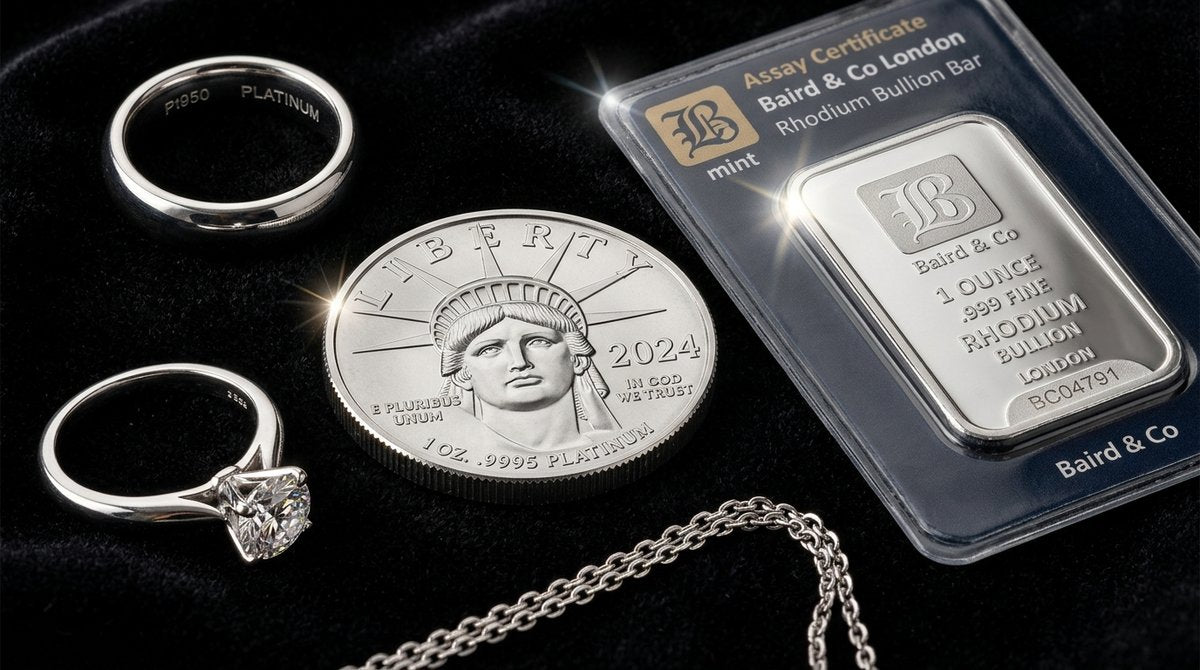
Platinum jewelry, palladium, rhodium, iridium and all PGM scrap. Industrial and dental PGM recovery.
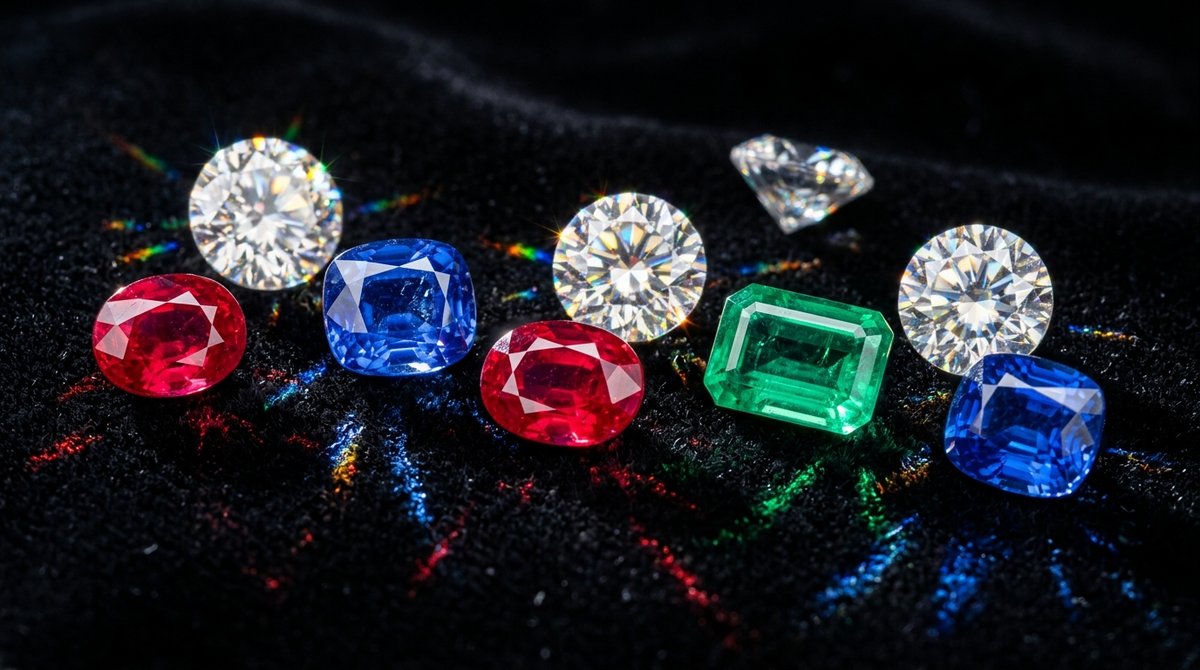
GIA-certified and uncertified diamonds, rubies, sapphires, emeralds, and estate stones.
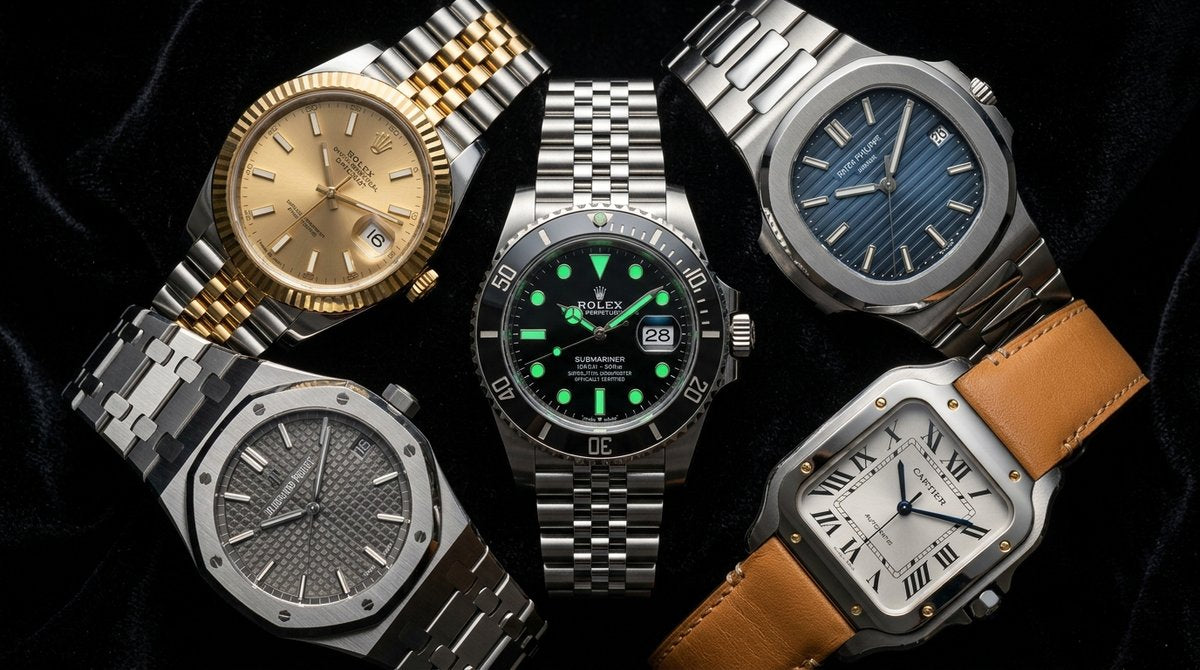
Top prestige brands — working or not, with or without papers. Market-rate offers always.
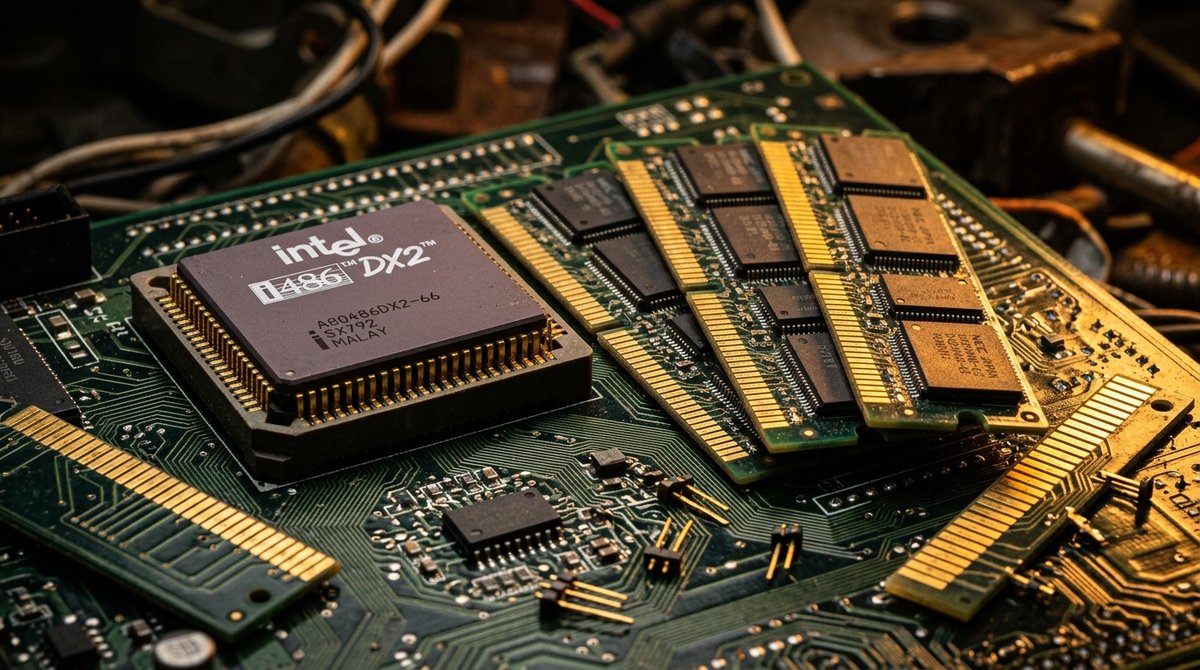
Gold-bearing CPUs, circuit boards, gold fingers, RAM, and palladium MLCCs. Bulk welcome.
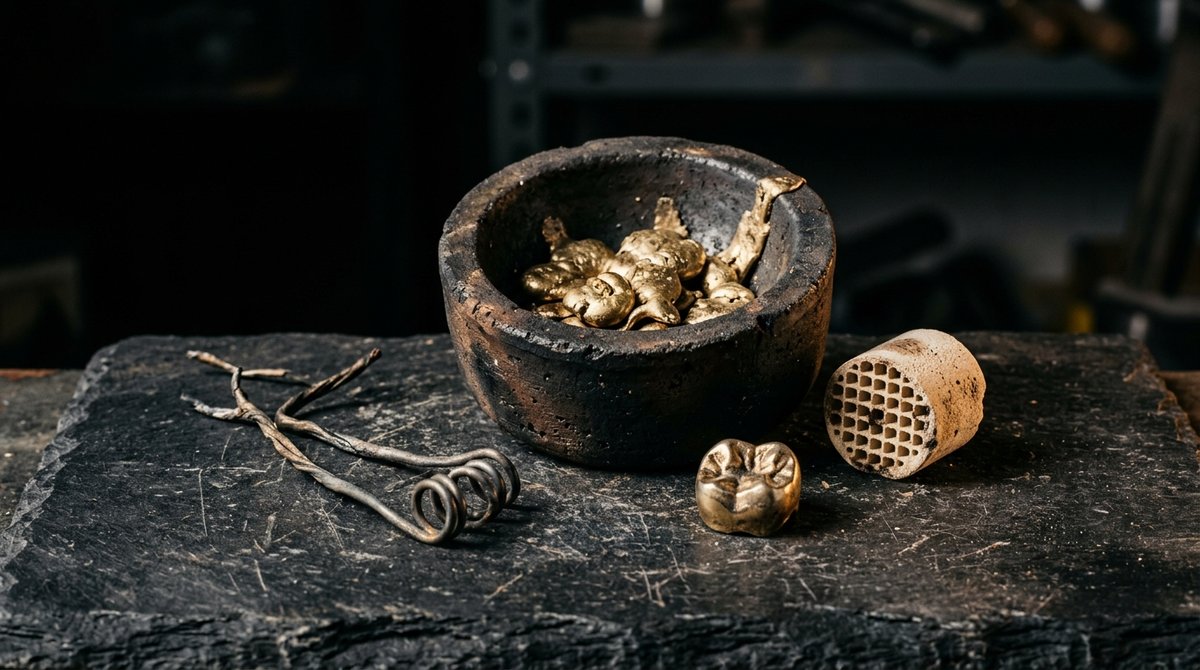
Dental alloy scrap, lab crucibles, catalysts, thermocouples, and all manufacturing PM waste.
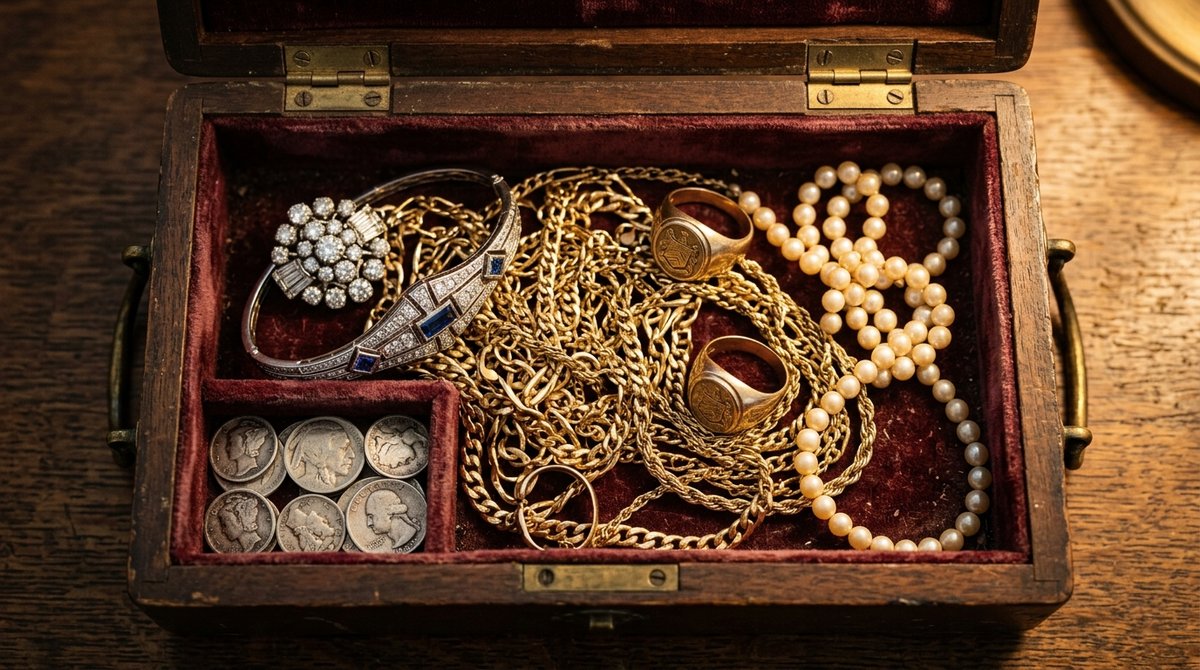
Full estate collections, antique jewelry, designer signed pieces, and mixed precious metal lots.
- Rings, necklaces, bracelets — all karats
- Broken, bent, tangled, or heavily worn pieces
- Gold chains — figaro, rope, box, herringbone
- Earrings, pendants, charms
- Gold-filled eyeglasses and frames
- Antique, Victorian & Art Deco estate jewelry
- Men's cufflinks, tie bars, money clips
- Dental crowns, bridges, partial plates
- Gold dental alloy scrap
- American Gold Eagles — all sizes (1oz, ½oz, ¼oz, 1/10oz)
- Canadian Gold Maple Leafs
- South African Krugerrands
- Austrian Philharmonics & British Sovereigns
- Gold bars — any mint, any size (1g to 1kg+)
- Pre-1933 US gold coins (St. Gaudens, Liberty)
- International sovereign gold coins
- Commemorative and proof gold issues
- Gold leaf, foil, and bonding wire
- Gold-plated electronic components
- Gold sweeps, floor dust, polishing residue
- Gold-bearing plating solutions
- Smelted buttons and doré bars
- Gold pen nibs and specialty items
- Karat scrap from jewelers and watchmakers
- Anything you think may contain gold — ask us
- Sterling silver (.925) jewelry — all types
- Fine silver (.999) art pieces and items
- Silver flatware sets — partial or complete
- Silver tea services, trays, and holloware
- Silver picture frames, candlesticks, bowls
- Antique and Victorian silverware
- Tarnished, oxidized, or damaged pieces accepted
- Mexican, Taxco, and Navajo silver jewelry
- Marcasite and antique paste silver pieces
- American Silver Eagles — all years (1oz)
- Pre-1965 US dimes, quarters, halves (90% silver)
- Morgan and Peace silver dollars
- 40% Kennedy halves (1965–1970)
- Eisenhower dollar proofs (40% silver)
- Silver bars — any size, any brand or mint
- Canadian Maple Leafs, Austrian Philharmonics
- World silver coins — any country, any age
- Junk silver bags and rolls
- Silver brazing alloys and hard solder
- X-ray film and photographic film (silver recovery)
- Photographic fixer and developer solutions
- Industrial silver contacts, relays, and switches
- Silver-bearing slag and sweeps
- Silver nitrate and chemical solutions
- Electrolytic silver recovery units
- Silver oxide batteries (bulk)
- Platinum jewelry — Pt950, Pt900, Pt850
- Engagement rings and wedding bands
- Platinum dental alloys and crowns
- Platinum bullion coins — American Platinum Eagles, Canadian Maples, Britannias, Koalas
- Platinum bullion bars — any size or mint (PAMP, Valcambi, Credit Suisse, Engelhard, Johnson Matthey)
- Laboratory crucibles, boats, and dishes
- Platinum wire, sheet, rod, and foil
- Spent platinum catalysts from refineries
- Platinum thermocouple wire (Type S, R)
- Palladium bullion coins — Canadian Maple Leafs, American Eagles, Russian Ballerinas
- Palladium bullion bars — any size or mint (PAMP, Credit Suisse, Valcambi, Johnson Matthey)
- Rhodium bullion bars — Baird & Co, Cohen Mint, PAMP, any size
- Rhodium bullion coins and rounds
- Palladium dental casting alloys and scrap
- Industrial process catalysts (lab & refinery)
- Rhodium-bearing sweeps and solutions
- Palladium MLCC capacitors (electronics)
- Palladium-plated contacts and connectors
- Fuel cell membrane components
- Iridium crucibles and laboratory containers
- Ruthenium sputtering targets
- Osmium items (rare — call ahead)
- PGM-bearing flue dust and sweeps
- Pt-Rh thermocouple wire (Type B)
- Aerospace PGM-coated turbine components
- PGM chemical solutions (any concentration)
- Mixed PGM scrap and complex alloys
- GIA, AGS, EGL, IGI certified stones — all sizes
- Uncertified loose diamonds (we evaluate on-site)
- Old mine cut, rose cut, and antique cuts
- European cut and transitional cut diamonds
- Fancy colored diamonds (yellow, pink, blue)
- Diamond melee and parcel lots
- Industrial and black diamonds
- Diamond-set jewelry — we value the stones separately
- Diamond stud earrings, tennis bracelets, solitaires
- Natural rubies — Burmese, Mozambique, Thai
- Natural sapphires — Kashmir, Ceylon, Montana, Australian
- Natural emeralds — Colombian, Zambian, Brazilian
- Alexandrite (genuine color-change stones)
- Fine tourmalines — Paraíba, Chrome, Rubellite
- Natural pearls and cultured pearl strands
- Padparadscha sapphires
- Spinel — red, blue, and Mahenge pink
- Fine natural tsavorite and demantoid garnet
- Aquamarine, tanzanite, and morganite
- Amethyst, citrine, and blue topaz
- Art Deco and Edwardian jewelry with stones
- Designer signed pieces — Tiffany, Cartier, VCA
- Jade — nephrite and jadeite (we test both)
- Coral, amber, and antique paste pieces
- Victorian mourning jewelry with gemstones
- Full estate gem collections purchased whole
- Rolex — all models: Submariner, Daytona, Datejust, GMT, Day-Date, Explorer, Oyster Perpetual
- Patek Philippe — all complications and dress watches
- Audemars Piguet — Royal Oak, Royal Oak Offshore, Code 11.59
- Vacheron Constantin — Overseas, Patrimony, Traditionnelle
- A. Lange & Söhne — Lange 1, Saxonia, Zeitwerk
- F.P. Journe, Richard Mille, Greubel Forsey
- Vintage dress watches from any prestige maker
- Cartier — Tank, Santos, Ballon Bleu, Panthère, Pasha
- Omega — Speedmaster, Seamaster, Constellation, De Ville
- IWC — Portugieser, Pilot, Portofino, Aquatimer
- Jaeger-LeCoultre — Reverso, Master, Polaris
- Breitling — Navitimer, Chronomat, SuperOcean
- Panerai, Hublot, TAG Heuer, Zenith
- Vintage pocket watches — gold-cased or signed makers
- Estate watch collections — purchased as a lot
- Working or completely non-functional
- With original box, papers, and accessories
- Without box or papers (still valuable)
- Water damaged, corroded, or moisture inside
- Broken crystal, crown, hands, or pusher
- Missing bracelet, strap, or clasp
- Franken watches and service pieces
- Vintage watches with faded or damaged dials
- CPUs & processors — ceramic Intel (286–Pentium era highest value), modern plastic-package CPUs
- RAM memory modules — all generations (SIMM, DIMM, DDR)
- Server and workstation motherboards
- Consumer motherboards (desktop and laptop)
- Hard drive controller and logic boards
- GPU and video cards
- Networking switches, routers, telecom cards
- Medical device and aerospace circuit boards (highest gold content)
- Gold edge connectors ("gold fingers") — stripped or on boards
- Ceramic CPU packages — highest gold content of any component
- BGA chips and IC packages
- Palladium MLCC capacitors (tan/brown multilayer ceramics)
- Gold-tipped IDE, SCSI, and edge connector strips
- SIM cards and smart cards (gold contact pads)
- Fiber optic transceivers (gold-plated pins)
- Sputtering targets — Au, Ag, Pt, Pd
- Gold finger strips — loose or bundled (bulk preferred)
- Floor and bench sweeps from electronics shops
- Polishing dust and grinding powder
- Gold and silver plating solutions (any volume)
- Spent plating anodes and bath materials
- Smelted buttons, beads, and doré bars
- PGM-bearing slag, ash, and filter cake
- Printed circuit board manufacturing scrap
- Crowns and bridges (gold alloy)
- Dental casting alloys and scrap
- Amalgam (silver/mercury)
- Dental sweepings and polishing dust
- PFM — porcelain fused to metal
- Dental lab bench sweeps
- Used impression materials (silver)
- Platinum and rhodium catalysts
- Spent autocatalysts
- Thermocouple wires (Pt-Rh)
- Laboratory crucibles and ware
- Chemical process catalysts
- Sputtering targets (Au, Ag, Pt)
- Silver oxide batteries
- Semiconductor bonding wire scrap
- Aerospace PGM-coated components
- PCB manufacturing scrap
- Photovoltaic cell scrap (silver)
- Brazing filler metals (Au/Ag/Pd)
- Electrolytic silver recovery units
- Chemical solutions containing PGMs
- Victorian and Edwardian jewelry
- Art Deco pieces (1920s–1940s)
- Mid-Century Modern jewelry
- Entire estate collections purchased
- Inherited jewelry and coin lots
- Religious articles (crosses, medals)
- Antique snuff boxes and cases
- Designer signed jewelry (Tiffany, VCA)
- Military medals and decorations
- Olympic and commemorative medals
- Vintage watch chains and fobs
- Antique compacts and vanity items
- Gold pen nibs and holders
- Estate box lots — purchased whole
- Testing is always 100% free
- Items marked 925, 750, 585, 417
- Items with "GF," "GP," or "RGP"
- Old heirlooms you can't identify
- Foreign jewelry with unknown marks
- Anything heavy and yellowish
- We'll tell you honestly what it's worth
Know Your Metal's Value
Gold has been money for 6,000 years. Silver built empires. Knowing what you have — and why it has value — puts you in control. Explore our guides on karats, hallmarks, coin identification, and the fascinating history behind the metals you're selling.
The purest gold available. Mostly seen in investment bars, coins, and traditional Asian bridal pieces. Deep, rich yellow color unmistakable from all other karats.
Thailand's traditional gold standard — the Thai Baht gold system uses 23K (96.5% pure) as its benchmark. Thai Baht gold jewelry is extremely common in Bay Area Thai and Southeast Asian communities. The deep, vivid yellow color closely resembles 24K but is slightly more durable. Sold by weight in "Baht" units (1 Thai Baht = 15.244g). Commonly found as thick chains, bangles, necklaces, and elaborate traditional ornaments. Rarely marked in Western karat notation — look for Thai script hallmarks or "965" stamps. We identify and buy Thai Baht gold at excellent rates — it is very high purity and very valuable.
Standard for South Asian and Middle Eastern bridal jewelry. Deep warm yellow with better durability than 24K. Common in Indian, Pakistani, and UAE wedding sets.
The international standard for fine jewelry. Rich color, excellent durability, preferred by European and luxury brands. Most Italian and designer pieces are 18K.
The most popular karat sold in the United States. Slightly paler than 18K but more durable. The best value balance for most buyers and sellers. Ideal for engagement rings.
The minimum karat legally sold as "gold" in the US. Palest yellow, most durable alloy. Very common in class rings, fashion jewelry, and military pieces. Still has real value.
A bonded gold layer (at least 1/20th by weight, minimum 10K) over base metal. Much more gold than plated. We buy gold-filled items. Often marked "1/20 14K GF" on the clasp.
Investment-grade pure silver. Used for bullion bars, rounds, and collectible coins. Brilliant white, more tarnish-resistant than sterling. Valued at or very close to spot price.
A modern premium silver alloy — 94% silver alloyed with germanium instead of copper. Significantly more tarnish-resistant than sterling, brighter white in color, and hypoallergenic. Developed in the UK in the 1990s and increasingly popular with contemporary jewelers. Higher silver content than standard sterling (.925) so we buy it at or above sterling rates.
The world standard for silver jewelry and flatware for 300+ years. 92.5% silver with 7.5% copper for durability. The most common silver we see daily.
Pre-1965 US dimes, quarters, half dollars, and dollars. $1 face value = ~0.715 oz silver. One of the most liquid forms of silver we buy.
Common in antique German, Italian, and Scandinavian silverware from the 19th–early 20th centuries. Often found in sets brought from Europe. Has real silver value.
Kennedy half dollars minted 1965–1970. Worth about half the silver of 90% coins per coin. Commonly found in inherited collections.
Electroplated nickel silver — base metal with a thin silver coating. Very little actual silver. Usually not worth buying individually, but ask us for large bulk lots.
950
The most common purity for fine platinum jewelry worldwide. 95% platinum alloyed with 5% ruthenium, iridium, or cobalt for hardness. All major jewelry brands — Tiffany, Cartier, Mikimoto — use Pt950. Significantly heavier and denser than white gold. A platinum ring of the same size as a gold ring weighs about 60% more. Look for the "950Pt" or "Pt950" stamp inside the band.
900
Very common in older American and Japanese platinum jewelry from the early-to-mid 20th century. Art Deco and Edwardian jewelry is frequently Pt900. Still extremely high purity — 90% platinum is more than any gold jewelry commonly available. We pay excellent rates for Pt900 pieces.
850
Less common but still very valuable. 85% platinum alloyed with other PGMs. Found in some Japanese and European pieces. Same bright white color as higher purities — our XRF identifies the exact platinum content instantly.
dium
Palladium shot from $200/oz in 2016 to over $3,000 by 2022 — one of the most dramatic price runs in precious metals history. Used extensively in catalytic converters (automotive) and increasingly in jewelry as a white gold and platinum alternative. We buy all palladium: jewelry, catalysts, dental alloys, industrial scrap. XRF identifies instantly.
dium
Rhodium has hit prices over $25,000 per troy ounce — far exceeding gold and platinum. It's used primarily as a plating on white gold and platinum jewelry (giving that bright mirror finish) and in catalytic converters. The rhodium plating on jewelry is too thin to recover, but we buy rhodium-bearing industrial materials, lab crucibles, and catalytic converter scrap that contains significant rhodium.
Gold?
White gold is yellow gold alloyed with white metals (nickel, palladium, silver) and then rhodium-plated to appear bright white. It is NOT platinum — it's gold. A "14K white gold" ring is 58.5% gold. Over time the rhodium plating wears off revealing a slightly yellowish tint underneath. Platinum is heavier, rarer, naturally white, and never needs replating. Our XRF tells the difference instantly — no guessing.
$5 Half Eagle: 8.36g total · 7.52g gold · 0.84g copper
Half Eagle ($5): 8.36g total · 7.52g gold
5 Peso: 4.17g · 3.75g gold | 10 Peso: 8.33g · 7.50g gold | 20 Peso: 16.67g · 15.0g gold
Half Dollar: 12.50g total · 11.25g silver | Dollar: 26.73g total · 24.06g silver
10 Peso (1956): 28.89g · 20.8g silver | 25 Peso: 22.50g · 16.2g silver
Gold
Solid gold means the entire piece is the same gold alloy all the way through. It does NOT mean pure gold — "solid 14K" means 58.5% gold throughout, which is still extremely valuable. Every gram counts. This is what we pay the most for.
Filled
Gold-filled (GF) is NOT gold-plated. By US law, gold-filled items must have a gold layer that is at least 1/20th of the total weight, and the gold must be at least 10K. A typical "1/20 14K GF" bracelet contains real, recoverable gold — often worth $3–$15+ per piece. We buy gold-filled items at fair rates based on weight.
meil
Vermeil (pronounced "ver-MAY") is sterling silver with a gold coating of at least 2.5 microns. The gold layer is too thin to recover economically, but the sterling silver base has real value. We pay for the silver content. A vermeil piece is essentially a sterling silver item — valuable, just not for the gold.
Plate
Gold-plated means a very thin layer of gold — typically 0.5 to 2.5 microns — applied over base metal (brass, copper, nickel, or silver). There is so little gold that it cannot be recovered economically. We generally do not buy gold-plated items for their gold content. However, if the base is sterling silver, we'll pay for the silver.
Gold
Rolled gold plate (RGP) is similar to gold-filled but with a thinner gold layer — less than 1/20th of total weight. It's more gold than plated but less than true gold-filled. We evaluate RGP items individually — some are worth buying, some aren't. Bring them in for free testing.
Wash
Gold wash, gold flash, and gold tone are the thinnest possible applications — sometimes just molecular layers of gold for color. No recoverable gold value whatsoever. These are purely decorative. Often wears off within months. We do not buy these for gold content — though again, if there's a silver base, we'll pay for that.
| Type | Gold Content | Base Metal | What We Pay | Common Marks |
|---|---|---|---|---|
| Solid Gold | 41.7%–99.9% | None | Full gold value | 10K, 14K, 18K, 585, 750 |
| Gold Filled (1/20) | ~5% by weight | Brass/Copper | Gold content value | GF, 1/20 14K GF |
| Gold Filled (1/10) | ~10% by weight | Brass/Copper | Gold content value | 1/10 10K GF |
| Vermeil | Trace | Sterling Silver | Silver content | 925 + gold color |
| Rolled Gold (RGP) | Very low | Brass/Copper | Case by case | RGP, Rolled Gold |
| Gold Plated (GP) | Trace only | Varies | Base metal only | GP, HGE, Gold Plated |
| Gold Tone/Wash | None | Varies | Usually nothing | Gold Tone, no mark |
Gold — The Metal That Shaped Civilization
No other material has influenced human history as profoundly as gold. From the tombs of ancient pharaohs to the vaults of Fort Knox, gold has been money, power, and beauty — all at once. Here's how it got there.
The First Gold
Gold is one of the first metals ever worked by humans — found naturally as nuggets and flakes in riverbeds, requiring no smelting or complex tools. The oldest known gold artifacts date to around 4,000 BC in Bulgaria (the Varna Necropolis), where gold ornaments were buried with the dead to signal status and power. Gold's rarity, its resistance to tarnish, and its brilliant color made it immediately special. It didn't rust, didn't corrode, and never lost its shine — unlike every other metal ancient people knew.
Egypt, Mesopotamia & the Ancient World
Ancient Egypt became the world's first great gold power. The Nubian mines south of Egypt produced enormous quantities of gold, and pharaohs used it to project divine authority — Tutankhamun's famous death mask contains over 24 pounds of solid gold. In Mesopotamia, Sumerian and Babylonian cities used gold in religious ceremonies and royal tombs. In ancient China, gold was already being used as currency and ornamentation by 1000 BC. The word "gold" in nearly every ancient language was also the word for sun — the connection between gold and divine solar power was universal.
The First Gold Coins
Around 700 BC in the kingdom of Lydia (modern-day Turkey), the world's first standardized coins were struck from electrum — a natural alloy of gold and silver. King Croesus of Lydia (from whom we get the phrase "rich as Croesus") later minted the world's first pure gold coins around 550 BC. This was a revolutionary innovation: instead of weighing out gold every time, merchants could now count coins of guaranteed weight. The idea spread instantly across Greece, Persia, and beyond. Coinage made trade faster, more reliable, and the basis for entire economies.
Greece, Rome & the Classical World
Alexander the Great's conquests between 334–323 BC transferred the enormous Persian gold treasury to the Greek world, flooding the Mediterranean with gold coins and accelerating trade across three continents. Rome later built the most sophisticated gold economy the ancient world had ever seen — the Aureus coin became the international reserve currency for centuries. Roman mines in Spain, Romania (Dacia), and North Africa produced gold on an industrial scale. So much gold flowed through the Roman economy that debasement of the coinage — adding more copper and less gold — eventually contributed to Rome's economic collapse.
The Islamic Golden Age & Medieval Europe
After Rome's fall, the Islamic world became the center of the gold economy. The gold dinar, introduced in 696 AD by Caliph Abd al-Malik, was the world's dominant gold currency for centuries, used from Spain to India. West African kingdoms — particularly Mali and Ghana — controlled the world's richest gold mines along the Niger River. Mansa Musa, Emperor of Mali, famously made a pilgrimage to Mecca in 1324 with 60,000 men and so much gold that his journey single-handedly crashed gold prices across North Africa and the Middle East for a decade. Meanwhile in Europe, gold coinage remained the currency of kings and international trade — the Florentine florin and Venetian ducat became the dollars of medieval Europe.
The Age of Exploration & New World Gold
Columbus's 1492 voyage kicked off Europe's obsession with New World gold. The Spanish conquest of the Aztec Empire (1519–1521) and the Inca Empire (1532–1572) brought staggering amounts of gold and silver back to Europe — the Spanish treasure fleet moved over 180 metric tons of gold across the Atlantic over two centuries. Mexican and Peruvian mines produced gold coins that became the world's first truly global currency: the Spanish gold escudo and the famous "pieces of eight" silver real. This flood of precious metals caused Europe's "Price Revolution" — inflation that lasted for over a century and reshaped the entire global economy.
The Gold Rushes — California & Beyond
On January 24, 1848, James Marshall found gold at Sutter's Mill in Coloma, California — less than 150 miles from where you're reading this. The California Gold Rush that followed brought 300,000 people to California from around the world, permanently transforming San Jose and the entire Bay Area from a small agricultural region into a booming commercial hub. Within three years California produced more gold than the entire world had in the previous decade. Gold rushes followed in Australia (1851), South Africa (1886), and the Klondike in Canada (1896) — each one reshaping the economies and populations of entire continents.
The Gold Standard Era
Through the 19th and early 20th centuries, most major nations adopted the gold standard — a monetary system where paper currency was directly backed by, and redeemable for, a fixed quantity of gold. Great Britain formally adopted it in 1821; the US fully committed in 1900 with the Gold Standard Act. The system provided extraordinary monetary stability but was also rigid — countries couldn't print money to fight recessions or fund wars without depleting their gold reserves. The US minted stunning gold coins during this era: the $20 Saint-Gaudens Double Eagle (considered the most beautiful US coin ever struck), the $10 Indian Head Eagle, and many others — the same coins we buy every week.
FDR's Gold Confiscation — Executive Order 6102
On April 5, 1933, President Franklin D. Roosevelt signed Executive Order 6102 — making it illegal for US citizens to own gold coins, bullion, or gold certificates. Americans were required to turn in their gold to Federal Reserve banks at $20.67 per troy ounce. Those who didn't faced fines of $10,000 (over $200,000 today) or up to 10 years in prison. The government then immediately revalued gold to $35 per ounce — a 69% devaluation of the dollar. This is why pre-1933 US gold coins (like the Double Eagle and Indian Head) are especially collectible today: they represent the last era of circulating American gold coinage.
Bretton Woods & the Dollar-Gold Link
At the end of World War II, 44 Allied nations met in Bretton Woods, New Hampshire to design a new international monetary system. The result: the US dollar became the world's reserve currency, fixed at $35 per troy ounce of gold, with all other currencies pegged to the dollar. This gave the US enormous economic power — and enormous responsibility. By the late 1960s, massive spending on the Vietnam War and the Great Society programs caused the US to print far more dollars than it had gold to back them. Foreign nations began demanding gold in exchange for their dollar holdings, draining Fort Knox rapidly.
Nixon Shock — The End of the Gold Standard
On a Sunday night in August 1971, President Nixon appeared on television to announce that the US would no longer convert dollars to gold at any price — ending the Bretton Woods system in a single speech. The "Nixon Shock," as it became known, untethered every currency in the world from gold permanently. For the first time in human history, all major world currencies became pure "fiat" money — backed only by government promises and trust. The immediate result: gold prices exploded. Within a decade gold rose from $35 to over $800 per ounce.
Americans Can Own Gold Again
On December 31, 1974 — 41 years after FDR's confiscation order — it became legal once again for American citizens to own gold bullion and coins. President Gerald Ford signed the legislation, and on January 1, 1975 the first legal gold market in the US opened. Gold immediately rallied. The US Mint began producing gold coins for investors again with the American Gold Eagle in 1986, followed by the Gold Buffalo in 2006. Today the US is the world's largest holder of gold reserves (over 8,000 metric tons), and gold ownership is completely unrestricted for American citizens.
Modern Gold — Safe Haven & Store of Value
Since the end of the gold standard, gold has traded freely on global markets 24 hours a day. Its price is driven by inflation fears, currency weakness, geopolitical crises, central bank buying, and investor demand. Gold hit $850 in 1980 during the Iran hostage crisis and the Soviet invasion of Afghanistan. It crashed through the 1980s and 90s as the US economy boomed. Then came the 2008 financial crisis — gold surged from $700 to $1,900 by 2011. In 2020, COVID-19 panic drove gold past $2,000 for the first time. In 2024 it crossed $2,500. Through every financial crisis, war, and recession, gold has endured as the world's oldest and most universal store of value — and it still is today.
Silver — The Metal of Commerce, Culture & Currency
While gold was the metal of kings and gods, silver was the metal of everyday people. For most of human history, silver was the currency of trade, wages, and commerce — the metal that actually made markets work. Its story runs parallel to civilization itself, from ancient Anatolia to the Wild West, from the Spanish Empire to the smartphones in your pocket.
Silver Before Gold — The First Refiners
Unlike gold, which occurs naturally as a pure metal, silver is almost always found combined with other minerals — primarily lead ore — and requires smelting to extract. This makes silver's early use even more remarkable: ancient peoples developed sophisticated metallurgy specifically to refine it. The earliest known silver artifacts come from Anatolia (modern Turkey) around 3000 BC. The refining process used was called cupellation — heating silver-bearing lead ore until the lead oxidized away, leaving pure silver behind. This same basic process is still used in assay laboratories today. Silver quickly spread as a prestige material across the Near East, Egypt, and the Aegean world.
The First Silver Coins — Lydia & Greece
The same Lydian kingdom that struck the world's first gold coins also produced silver coinage around 600 BC. But it was Greece — and particularly Athens — that made silver coins the engine of an entire civilization. The discovery of massive silver deposits at Laurion (near Athens) around 483 BC transformed Athens overnight. The Athenian statesman Themistocles convinced the city to use the windfall to build a navy of 200 warships — the fleet that defeated Persia at the Battle of Salamis in 480 BC and secured Greek independence. The famous Athenian "Owl" tetradrachm, stamped with the goddess Athena on one side and an owl on the other, became the international reserve currency of the ancient Mediterranean world — the dollar of its era.
Rome & the Denarius — Empire Built on Silver
The Roman Empire ran on silver. The denarius — introduced around 211 BC — became the most widely used coin in history up to that point, used for soldiers' pay, taxes, commerce, and daily trade across three continents. At its peak the denarius was struck from nearly pure silver (~98%). But as the empire overextended and wars became expensive, Roman emperors did something that would echo through history: they debased the currency — melting coins and adding more copper, reducing the silver content. By 268 AD the denarius contained less than 2% silver. The resulting inflation contributed directly to Rome's economic collapse. History's first great lesson in currency debasement was written in silver.
Medieval Silver — Dirhams, Thalers & the Islamic World
After Rome's fall, silver remained the backbone of European and Islamic commerce. The Islamic silver dirham became one of the most widely traded coins in the world — found by archaeologists from Scandinavia to Southeast Asia, testament to the reach of medieval Islamic trade networks. In Central Asia and Europe, large silver deposits in Bohemia (modern Czech Republic), Saxony (Germany), and the Carpathian mountains powered the economies of medieval kingdoms. The Joachimsthaler — a large silver coin struck beginning in 1518 in Joachimsthal, Bohemia — became so widely used and trusted that its name was shortened to "thaler." That word, passed through Dutch as "daalder," became the English word "dollar."
The Spanish Empire & the World's Greatest Silver Rush
If the California Gold Rush was big, the Spanish colonial silver rush was civilization-altering. In 1545, the Spanish discovered Cerro Rico ("Rich Mountain") at Potosí in modern Bolivia — a mountain so packed with silver ore that it produced an estimated 40,000 metric tons of silver over three centuries. The silver mines of Potosí and Zacatecas in Mexico made Spain the world's first global superpower and flooded the entire world with silver. The Spanish "Piece of Eight" (real de a ocho) — an 8-real silver coin — became the world's first truly global currency, used in trade from Manila to London to Canton (Guangzhou). It was legal tender in the United States until 1857. Even the "$" dollar sign is believed by many historians to derive from the "P" and "S" of "Pesos" written over each other — the mark on Spanish silver coins.
The US Silver Dollar & Bimetallic Standard
The United States Coinage Act of 1792 established the US dollar as a unit of silver — specifically 371.25 grains of pure silver — while also allowing gold coins. This created a bimetallic monetary system where both gold and silver were legal currency at a fixed ratio. The famous Morgan Silver Dollar (1878–1921) and Peace Dollar (1921–1935) were the workhorses of American commerce — the coins that built the West. The Morgan dollar was minted by the billions and circulated everywhere from frontier saloons to New York banks. Pre-1965 US coins — dimes, quarters, half dollars — were all struck in 90% silver as a matter of law right up until 1964, when rising silver prices made the coins worth more as metal than as money, and the government switched to copper-clad coinage.
The Comstock Lode & America's Silver Wars
In 1859, the Comstock Lode — discovered just east of Lake Tahoe in Nevada — became one of the richest silver strikes in history, producing over $300 million worth of silver and gold. The wealth funded the Union side of the Civil War and made San Francisco and the Bay Area boom. The silver debate then tore American politics apart. Western mining interests and debtors wanted "Free Silver" — unlimited coinage of silver to inflate the money supply and make debts easier to pay. Eastern bankers and creditors wanted the gold standard. William Jennings Bryan's famous 1896 "Cross of Gold" speech — arguing that America should not be "crucified upon a cross of gold" — is still considered one of the greatest political speeches in American history. The gold standard won, and silver's role as official money slowly faded.
The Last Era of Silver Coinage
While FDR confiscated gold in 1933, silver remained in everyday US coins through 1964 — dimes, quarters, half dollars, and dollar coins were all 90% silver. The US also maintained massive silver reserves and continued to issue Silver Certificates — paper money backed by and redeemable for physical silver. By the early 1960s, rising industrial demand for silver pushed prices high enough that coins were worth more as metal than as currency. Congress passed the Coinage Act of 1965, eliminating silver from dimes and quarters entirely, and reducing half dollars to 40% silver (then eliminating silver from those too in 1970). Americans began hoarding the old silver coins — the most natural reaction in history when real money is replaced by cheaper substitutes.
The Hunt Brothers & the Silver Corner
The most dramatic episode in modern silver history involved two Texas billionaire brothers — Nelson Bunker Hunt and William Herbert Hunt — who attempted to corner the entire world silver market. Starting in 1973, the Hunt brothers began accumulating physical silver and futures contracts on a massive scale. By early 1980 they controlled an estimated 100 million troy ounces of silver — roughly one third of the world's entire above-ground supply. Silver prices exploded from under $2 per ounce in 1973 to an all-time high of $49.45 on January 18, 1980. Then the commodity exchanges changed the rules, limiting silver futures purchases. The market crashed. In a single day — "Silver Thursday," March 27, 1980 — silver dropped 50%. The Hunt brothers lost over $1 billion and eventually went bankrupt. The episode remains history's most dramatic example of precious metals speculation.
Modern Silver — Bullion, Industry & Technology
The US Mint launched the American Silver Eagle in 1986 — the world's most popular silver bullion coin — bringing silver investing back to the mainstream. But silver's modern story has a twist that gold doesn't: it's also an industrial metal. Over half of all silver mined today is consumed by industry — not hoarded or worn. Silver is the most electrically conductive metal on earth and cannot be replaced in many applications. It's in every solar panel (photovoltaic cells use silver paste to conduct electricity), every smartphone screen, every electric vehicle circuit board, every X-ray and medical imaging device. As the clean energy revolution accelerates, industrial silver demand has hit record highs. Silver today sits at the crossroads of ancient monetary history and 21st century technology — which is exactly why it remains one of the most interesting metals we buy.
Silver Across Civilizations — A Universal Symbol
Silver's cultural resonance runs as deep as gold's — just differently. In nearly every human culture, silver is associated with the moon, femininity, purity, and protection, while gold represents the sun and masculine power. Mexican silver craftsmanship from Taxco has been world-famous since the 16th century — the delicate filigree work and heavy Aztec-inspired pieces brought in by Bay Area Latino families are some of the most beautiful silver we see. In Chinese tradition, silver was the metal of everyday commerce and gifting — silver ingots called sycee were used as currency and buried with the wealthy. Sterling silver flatware sets were the backbone of American middle-class wealth and social status for over a century — the pride of households, passed down through generations, and still valuable today. Every culture that developed metallurgy discovered silver independently — and every one found a reason to treasure it.
Get Your Free Quote
Submit online or walk in any time. No appointment needed. We respond to online requests within 2 business hours.
Tell us what you have — type, karat, approximate weight, and condition. A photo helps but isn't required.
We verify metal content instantly with our spectrometer. Non-destructive. Takes seconds. You see the readout in real time.
We calculate your offer based on live spot prices and actual metal content. We show every step of our math.
Accept and receive cash, check, or bank wire on the spot. No holds. No waiting. You leave with your payment.
We'll contact you within 2 business hours.
Or walk in any time — no appointment needed.
642 Blossom Hill Rd · San Jose, CA 95123
(408) 569-5708 · Mon–Sat 11am–6pm
You Come to Us — or We Come to You
No matter how you prefer to do business, we make it easy. Choose the option that works best for you.
Visit Our Store
Walk into our San Jose showroom any time during business hours. No appointment needed. Get an instant free assessment with our XRF spectrometer and leave with payment in hand.
- 642 Blossom Hill Rd, San Jose CA
- Mon–Sat · 11:00am – 6:00pm · Sun by Appt
- XRF testing on-site — instant results
- No appointment needed
- Walk out with cash in hand
We Come to You
We travel directly to your home, office, or preferred location in the Bay Area. Perfect for large collections, estate lots, or anyone who prefers privacy and convenience.
- San Jose & surrounding Bay Area
- Scheduled at your convenience
- We bring our testing equipment
- Pay on the spot — same visit
- Discreet, professional, insured
Public Meet-Up
Prefer a neutral location? We'll meet you at a public spot — a coffee shop, bank lobby, or police station parking lot. Quick, safe, and convenient for smaller lots.
- Bank lobbies & public spaces
- Police station parking lots welcome
- Usually 15–30 minutes total
- No appointment needed for small lots
- Text us to confirm a time & place
The Bay Area's Trusted Buyer
Over a decade of fair, transparent precious metals buying in San Jose. Our repeat business speaks for itself.
Frequently Asked Questions
Everything you want to know before you walk in.
No appointment needed for walk-ins during business hours (Mon–Sat 11am–6pm). We serve customers on a first-come, first-served basis. For very large collections, estate lots, or if you'd like us to come to you, a quick call ahead is helpful so we can prepare — but it's never required for a regular visit.
Most transactions take 15–30 minutes for a typical jewelry or coin collection. Our XRF spectrometer gives instant readings — there's no waiting for acid tests or sending items out. A large estate lot might take an hour. You'll never feel rushed, and you'll leave with payment the same day.
Absolutely. Broken chains, bent rings, single earrings, tangled jewelry, pieces with missing stones — we buy all of it. Scrap gold and silver is worth exactly the same as intact pieces. If it has precious metal content, condition doesn't matter to us. Bring everything.
California law requires us to record the seller's identity for all precious metals purchases. A valid, government-issued photo ID is required — California driver's license, state ID, US passport, or Mexican consular ID (matrícula consular) are all accepted. We are required to keep a record of the transaction. This is standard for all licensed precious metals dealers in CA.
No strict minimum. We'll look at anything. That said, for very small quantities (a single thin chain, a few grams of low-karat gold), the transaction may not be worth your drive time — use our scrap calculator above to get an estimate first. For larger lots, estate collections, or bulk materials we're always very interested regardless of condition.
Yes. Estate and inherited jewelry is a significant part of what we buy. You'll need your own valid ID and, ideally, documentation establishing your authority over the estate (letters testamentary, probate documents, or a death certificate with proof of relationship). We handle these situations sensitively and with discretion. Call us first if you have questions about your specific situation.
Every offer is based on three things: (1) the live spot price of the metal, (2) the actual metal content verified by our XRF spectrometer, and (3) the exact weight on our NIST-calibrated scales. We show you all three numbers and explain exactly how we get to the offer. There's no secret formula — just math. You can check our work in real time.
Always. There is zero obligation to sell. We make our offer, explain how we calculated it, and you decide. You can take your items back at any point before agreeing to the sale — no fee, no pressure, no hard feelings. We'd rather you leave happy and come back than feel pushed into a decision you're not sure about.
Yes — our XRF (X-ray fluorescence) spectrometer is completely non-destructive. It reads the metal content of your piece in seconds using X-rays, with no scratching, no acid, and no physical contact that could damage the item. Your jewelry looks exactly the same after testing as before. This is the gold standard in professional precious metals testing.
Gold-filled (GF) items — yes, we buy these. They contain real, recoverable gold (at least 1/20th of total weight). Gold-plated items generally have too little gold to recover economically, so we typically don't purchase those for their gold content. However, if a plated piece has a sterling silver base, we'll pay for the silver. See our "Gold-Filled vs Plated" education tab for full details.
Sí. We serve San Jose's Latino community and speak Spanish fluently. We also buy Thai Baht gold (23K, 96.5% pure), Mexican gold coins (Centenarios, 50 Pesos), and other gold common in immigrant communities. Everyone is welcome. No one will make you feel uncomfortable about what you have or where it came from.
Cash on the spot for most transactions. For larger amounts, we can issue a bank check or arrange a same-day wire transfer to your account. We discuss payment preference before completing any transaction — no surprises. For very large transactions (estate collections, bulk industrial lots), contact us in advance so we can arrange the appropriate payment method.